Introduction:
In the realm of interior design, wardrobe finishes are far more than just a surface treatment—they define the tactile experience, aesthetic character, and durability of one of the most functional pieces in any room. Choosing the right wardrobe finish material is essential not only for visual appeal but also for longevity, maintenance, and alignment with the overall design language of a space. From high-gloss acrylics to warm, textural cane, each material brings a unique blend of properties suited to different design sensibilities and practical needs. This guide explores the most popular wardrobe finishes in detail, helping homeowners, designers, and architecture enthusiasts make informed, design-driven decisions.
Veneer Finish:
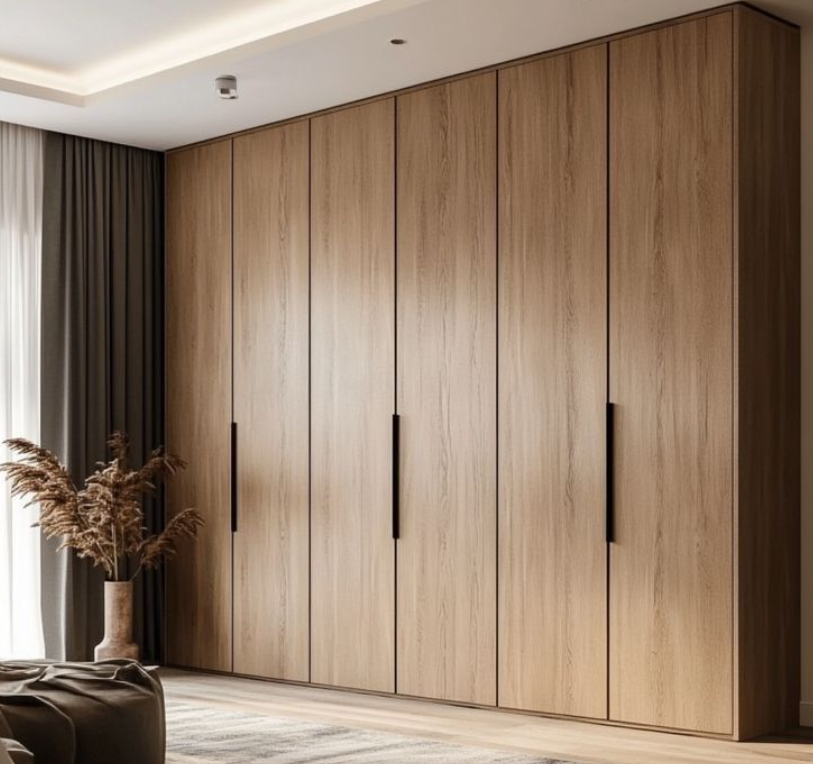
Source: baloscabinet.com
Veneer is a thin slice of natural wood that’s applied over a core surface, typically plywood or MDF, to replicate the beauty of solid wood without the cost or sustainability concerns. Veneer retains the organic grain and warmth of real wood, offering a natural, high-end finish that’s difficult to replicate with synthetic materials. It's available in a wide variety of wood species like teak, oak, walnut, and ash, allowing designers to choose according to the mood—whether earthy and rustic or sleek and contemporary. Veneers can be polished or stained, offering flexibility in finish. They do require maintenance to protect from moisture and scratches, but when treated well, they age gracefully and elevate the aesthetic with their rich, tactile appeal. Veneers are especially popular in luxury homes, boutique wardrobes, and contemporary residential interiors.
Acrylic Finish:
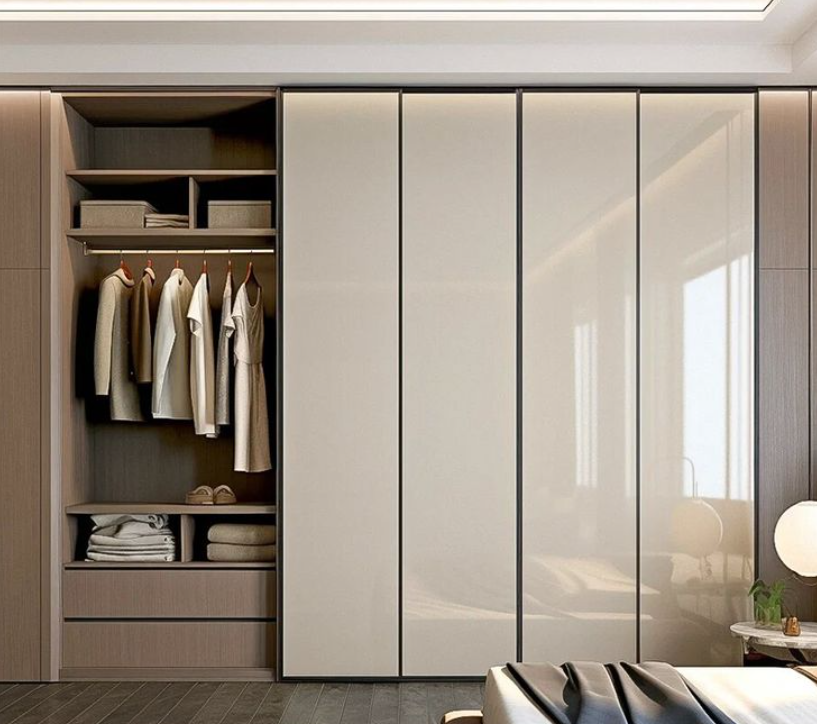
Source: alibaba.com
Acrylic wardrobe finishes are known for their high-gloss, mirror-like surface that gives wardrobes a sleek, modern, and premium appearance. Made of a non-toxic, high-quality polymer, acrylic sheets are pasted onto MDF or HDF boards to create a seamless, highly reflective finish that is both striking and durable. Acrylic is highly resistant to moisture, UV light, and scratches, making it ideal for high-usage wardrobes in urban homes or compact apartments where wear and tear is common. It is available in a wide spectrum of vibrant colors and is particularly suited for minimal, high-gloss modern interiors. However, fingerprints and smudges may be more visible, so regular cleaning is necessary to maintain its sheen. Acrylic wardrobes work well in modern, urban apartments and in designs that favor a glossy, bold aesthetic.
Glass Finish:
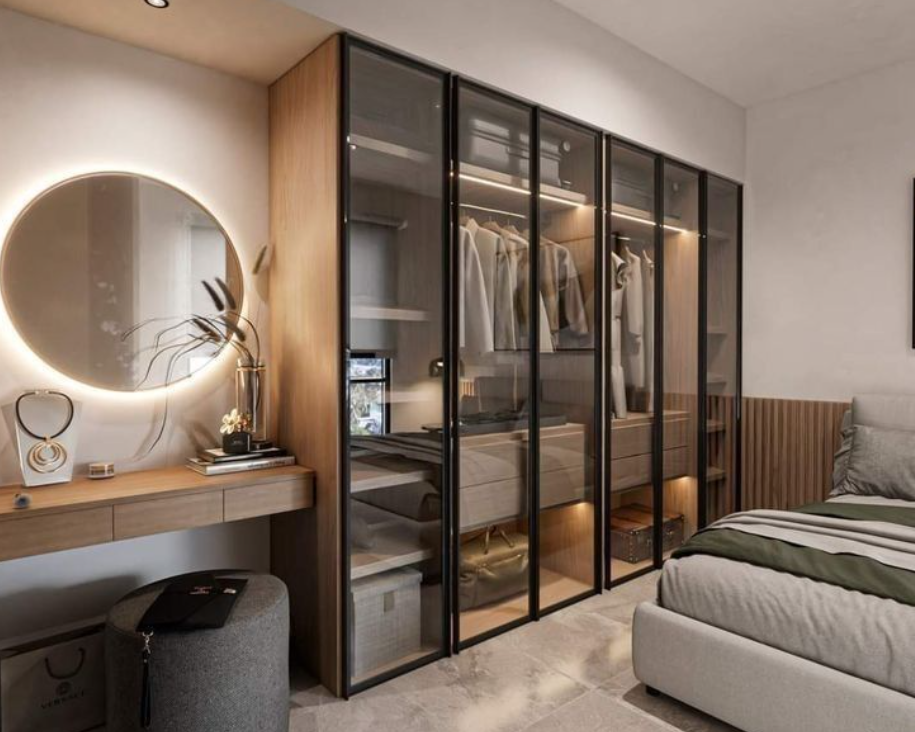
Source: Gala Design
Glass-finished wardrobes offer a refined, elegant appeal, blending functionality with visual lightness. Typically used with aluminum or wooden framing, glass panels can be frosted, lacquered, tinted, or back-painted to suit different interior themes. Lacquered glass, in particular, offers vibrant color with a glossy surface, while frosted glass adds a diffused look that maintains privacy. Glass finishes are easy to clean and durable when tempered, but they do require careful handling during installation. They’re perfect for compact spaces as they reflect light and make rooms feel more open. Glass wardrobes are often used in contemporary or high-end residential designs, walk-in closets, and premium hospitality interiors, offering a sleek and polished feel while enabling color customization through the back-painting technique.
Laminate Finish:
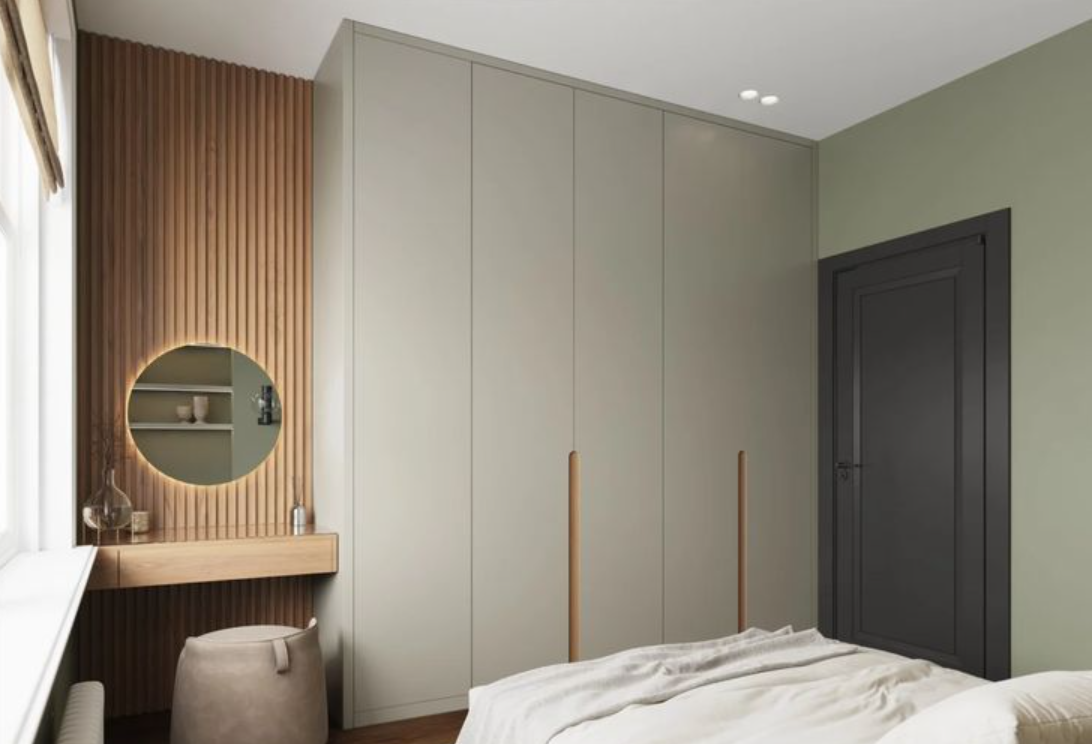
Source: urbanwardrobes.co.uk
Laminate remains one of the most popular and cost-effective wardrobe finishes, known for its wide availability, resilience, and design versatility. Made by pressing together layers of paper and plastic resins, laminates come in numerous textures—matte, glossy, suede, or textured wood grain—and a vast array of colors and patterns. They are low maintenance, scratch-resistant, moisture-resistant, and relatively easy to clean, making them ideal for wardrobes in busy homes or rental properties. While laminates may not have the tactile richness of natural materials like veneer, their durability and affordability make them an excellent choice for both budget and mid-range interior projects. Laminates are commonly used in urban homes, compact apartments, and institutional housing, where functionality and affordability are key.
Cane Finish:
Source: dwell.com
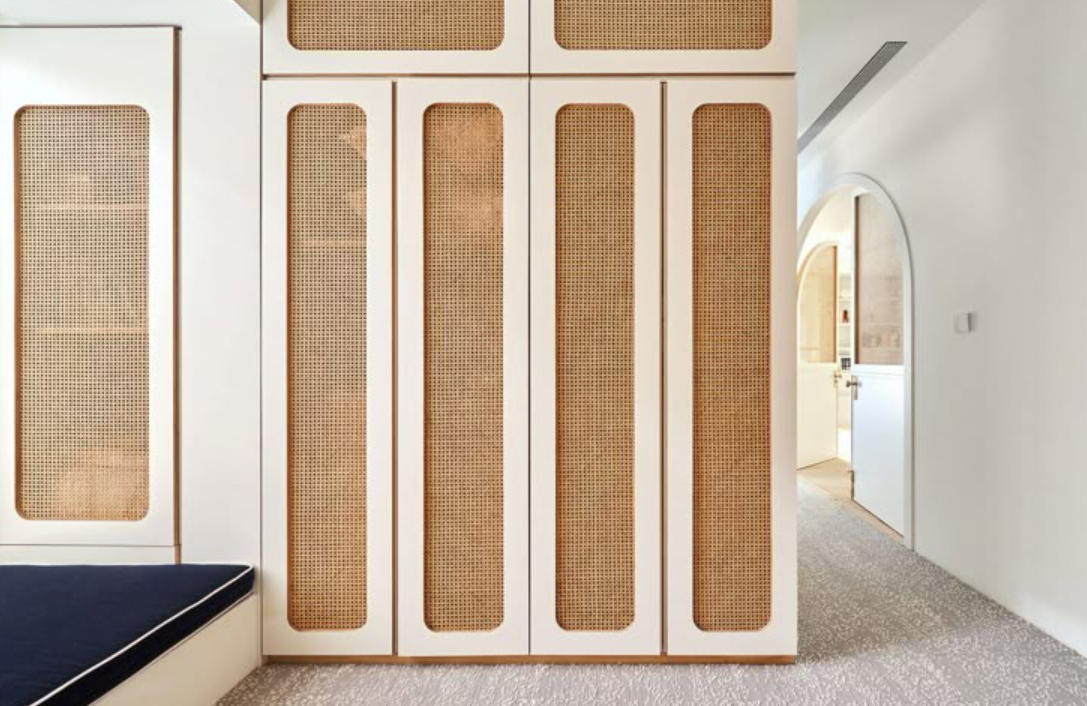
Cane wardrobes bring warmth, tactility, and a handcrafted charm to interior spaces. Cane weaving, traditionally used in furniture, is now being integrated into wardrobe shutters for a breezy, tropical or rustic aesthetic. Natural cane is sustainable, biodegradable, and lightweight, making it an eco-friendly option. When framed with wood or metal and combined with breathable linen backing or left semi-open, cane panels provide natural ventilation—ideal for clothing storage in humid climates. Cane does require some maintenance to prevent sagging or breakage over time, but it ages beautifully and adds a sense of artisanal craftsmanship. Cane wardrobes are perfect for resort-style homes, tropical villas, bohemian interiors, and vernacular design contexts, where texture and sustainability are central themes.
Conclusion:
Wardrobe finishes do more than meet the eye—they’re a fusion of function, material intelligence, and design expression. Whether you're looking for timeless elegance with veneer, modern sheen with acrylic, a blend of transparency with glass, the budget-friendly versatility of laminate, or the raw earthiness of cane, each material tells its own story. The choice of wardrobe finish can significantly impact not only the mood of a space but also its longevity and ease of use. With a deep understanding of each material’s strengths and characteristics, architects and designers can craft wardrobe solutions that are as beautiful as they are practical.